
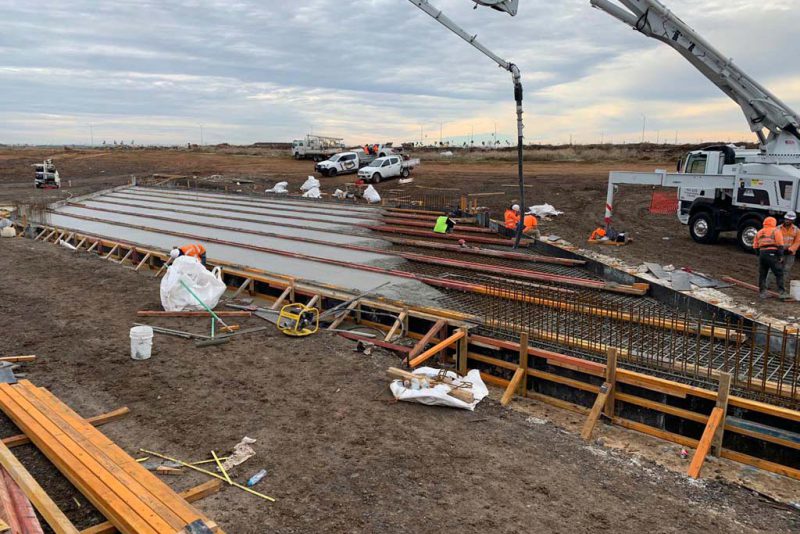
BridgeCon delivers expert steel protection in Victoria for road structures using galvanising and high-build coatings engineered for lasting durability.
Durability, safety, and performance rely on effective steel protection for road structures that resists moisture, salt, and corrosive elements. Selecting the right system, whether galvanising or high-build coatings, ensures long-term resilience in demanding environments. At BridgeCon, we provide corrosion control solutions engineered to Australian Standards for the reliability of Victoria’s road infrastructure.
Engineering Factors Influencing Corrosion Resistance
Road infrastructure operates in diverse and challenging conditions. Steel components face corrosion accelerated by humidity, temperature fluctuations, and airborne contaminants. Selecting an appropriate protective system requires technical evaluation of:
• Environmental Classification: Defined under AS/NZS 2312.1 and 2312.2, this identifies corrosion categories from C2 (mild) to C5 (severe). Correct classification ensures the protection system matches the site’s exposure and environmental demands.
• Surface Preparation: Abrasive blasting and cleaning remove rust, scale, and contaminants before coating. A properly prepared surface ensures strong adhesion and consistent protective coverage.
• Coating Application Control: Temperature, humidity, and film thickness must be tightly monitored during application. Controlled conditions prevent coating defects and extend service life.
• Maintenance Interval: Regular inspections and maintenance cycles help detect early wear or damage. Planned recoating schedules reduce lifecycle costs and maintain structural protection.
• Structural Geometry: Welds, joints, and sharp edges require careful detailing to prevent moisture entrapment. Smooth transitions and proper drainage improve coating performance and durability.
Optimising Steel Protection for Road Structures through Material Science
Hot-dip galvanising forms a zinc-iron alloy that bonds to the steel surface, creating a self-healing layer that delivers long-term barrier and cathodic protection. It provides consistent corrosion resistance ideal for exposed bridge and road components.
High-build coatings use multi-layer epoxy or polyurethane systems to form a dense chemical barrier against moisture and pollutants. Duplex systems combining galvanising and coating achieve superior durability and performance in demanding structural environments.
Performance Comparison: Galvanising vs. High-Build Coatings
A direct comparison between galvanising and high-build coatings highlights how each system performs under different structural and environmental conditions. Understanding these distinctions helps engineers determine the most efficient and durable protection strategy for long-term infrastructure reliability.
| Criteria | Galvanising | High-Build Coatings |
| Protection Type | Cathodic and barrier | Barrier only |
| Lifespan (Typical) | 40–80 years | 20–30 years |
| Maintenance Needs | Minimal | Periodic recoating |
| Application Control | Factory process | On-site controlled environment |
| Cost Efficiency | Higher initial, lower lifecycle | Lower initial, higher long-term |
Both methods provide durable performance when correctly specified and applied. However, galvanising offers superior corrosion resistance for coastal or industrial environments, while coatings provide flexibility and easier onsite repair in confined structures.
Maximising Durability with Expert Protection Systems
At BridgeCon, we design and apply advanced corrosion protection systems to extend the life of critical infrastructure across Victoria. Our expertise ensures every project benefits from optimised galvanising or coating solutions that meet rigorous safety and performance standards.
For reliable steel protection for road structures, contact us at BridgeCon today to discuss tailored options for your next civil project.
Related Blog Article: Road Construction Services Melbourne: Safe, Compliant and Built to Last
Optimized by: Netwizard SEO
