
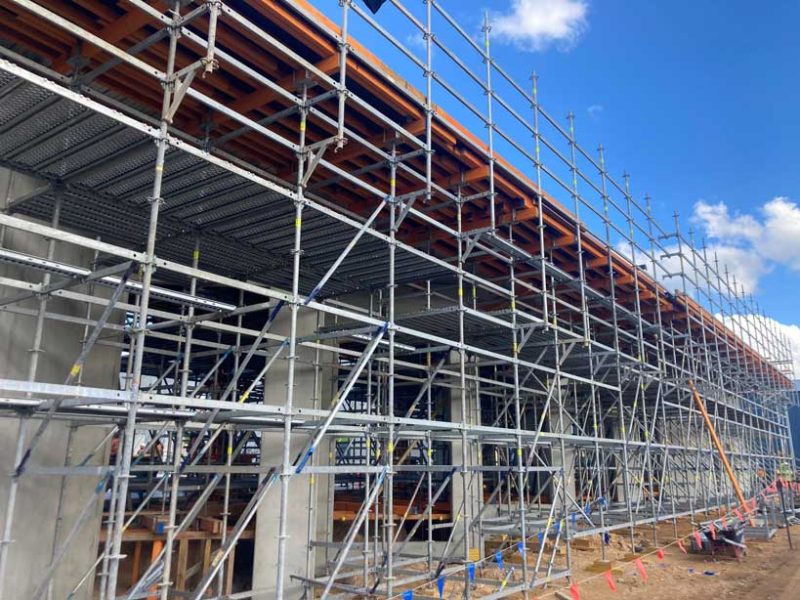
Strengthen civil projects with temporary works engineering by Bridgecon in Melbourne, supporting compliant propping and access systems on civil sites.
Temporary structures support permanent civil assets during construction and must perform under demanding site conditions. Temporary works engineering provides the technical framework that ensures these systems remain stable, compliant, and safe throughout all construction stages. Civil infrastructure projects rely on engineered temporary solutions to manage structural loads, sequencing constraints, and workforce safety without disrupting long-term asset integrity.
Temporary Works Engineering Applied to Structural Support Systems
Temporary works systems interact directly with live construction loads and evolving site conditions. Engineering input ensures that falsework, propping, and edge protection systems perform within allowable tolerances while accommodating construction methodology and environmental influences.
Temporary works engineering applies structural calculations, staged load analysis, and risk assessment to prevent progressive failure. Design oversight improves constructability, maintains compliance with Australian Standards, and reduces rework during complex civil builds.
Design Considerations for Falsework and Propping Systems
Falsework and propping arrangements support formwork, precast elements, and partially completed structures. Engineering design evaluates load transfer paths, ground bearing capacity, and system redundancy to maintain stability during placement and curing operations.
Temporary works engineering ensures that these systems remain adaptable to sequencing changes. Design verification allows site teams to manage deflection control, settlement limits, and removal timing without compromising structural safety.
Common Temporary Works Systems Used in Civil Construction
Temporary works solutions vary depending on structural form, site constraints, and construction sequencing. The following systems are routinely engineered for civil infrastructure projects:
- Falsework Structures: Engineered temporary frameworks designed to safely support formwork, reinforcement, and wet concrete loads during bridge decks and elevated pours.
- Propping Systems: Adjustable vertical support systems used to control deflection and maintain stability of slabs, beams, and precast elements during construction stages.
- Edge Protection Systems: Compliant safety barriers installed along exposed edges to prevent falls and protect workers in elevated construction zones.
- Temporary Bracing: Structural lateral supports that restrain incomplete elements against wind, construction loads, and movement before permanent fixation.
- Access Platforms: Load-rated working platforms engineered to provide stable and safe access for personnel during sequential construction activities.
Engineering Compliance and Safety Integration
Temporary works systems must meet structural performance criteria and workplace safety regulations. Engineering oversight integrates compliance with Australian Standards and Safe Work Australia guidelines.
- Load Path Verification: Structural checks confirming applied construction loads are transferred safely through temporary systems to supporting ground or foundations.
- Design Certification: Formal engineering documentation verifying that temporary works designs comply with regulatory, project, and safety requirements.
- Installation Sequencing: Planned erection processes that ensure temporary systems are installed in accordance with construction methodology and load staging.
- Inspection Protocols: Scheduled engineering and site inspections identifying signs of movement, overloading, or non-compliant use.
- System Removal Planning: Controlled dismantling strategies that maintain structural stability and site safety as permanent works become self-supporting.
Engineered Temporary Works Solutions for Civil Infrastructure
Temporary works engineering supports civil construction efficiency, safety, and compliance across all project phases. Professionally engineered systems reduce construction risk while enabling complex sequencing and accelerated delivery.
Bridgecon provides temporary works solutions from our Melbourne base, supporting civil infrastructure projects with compliant falsework, propping, and access systems. Our engineering approach integrates safety, constructability, and compliance to support efficient delivery and consistent on-site performance.
Contact us to discuss compliant temporary works systems designed for safety, constructability, and performance.
Related Blog Article: Formworking and Material Science Considerations from Formwork Engineering Experts
Optimized by: Netwizard SEO
